THE HUMAN TOUCH, POWERED BY AI
THE FIRST TIME PULSE TESTED GENERATIVE AI, in July 2023, the experiment was almost charmingly simple: Could ChatGPT and Google Bard write a credible marketing email for a couples massage? The answer was yes—
AI becomes valuable when it improves decisions, supports teams, protects culture and creates more room for the human touch.
but the larger conclusion was still mostly amazement. A year later, the conversation shifted from novelty to operations: scheduling, marketing, customer service, HR, inventory, finance and personalization. By August 2025, the question had matured again. AI was no longer presented as a futuristic spa accessory, but as a practical back-office partner—useful for improving efficiency, supporting teams and strengthening guest experiences without replacing the care at the center of spa.
In this fourth annual AI review, the conversation has moved again. ISPA Vice President Crystal Ducker now contributes a regular column offering practical tips for spa leaders who want to implement AI tools in their daily work. So this year's Pulse Points takes a wider view: How are LLMs and other AI tools being adopted across business leadership, hospitality, beauty and spa administration—and what should spa leaders take from that momentum?
The headline is not that AI has arrived. It is that AI is becoming ordinary.
Gallup reported that half of U.S. employees in 2026 use AI at work at least a few times a year, with 28 percent using it a few times a week or more. SHRM's 2026 research on AI in HR found organizations are more often using AI to evolve work than eliminate it: HR professionals reported improved efficiency, work quality and creativity, while job displacement remained far less common than reskilling, role redesign and workflow change. Hospitality Net reports hoteliers are increasing AI budgets and moving from exploration to execution. BCG likewise described AI-first hotels as leaner to operate and richer in customer and employee experience.
For spa leaders, those findings matter because spas sit at the intersection of hospitality, wellness, retail, service culture and labor-intensive operations. AI can help with the administrative drag that keeps talented people away from higher-value work. It can summarize guest feedback, draft staff communications, identify service trends, suggest rebooking campaigns, compare retail sales by treatment category, flag no-show patterns, help prepare meeting agendas, write job descriptions, analyze survey results and translate data into plain-language next steps.
From 2023 to 2026: Pulse Tracks AI's Growth
CONSUMER-AVAILABLE AI TOOLS began moving rapidly into the mainstream less than four years ago, as image generators, writing assistants and conversational chatbots became easier for the public to access. The most significant milestone came on November 30, 2022, when OpenAI launched ChatGPT, bringing large language models into everyday use for millions of people.
- 2023: Pulse tested ChatGPT and Bard (now named Gemini) with a basic marketing prompt. The result showed AI could produce plausible spa communications, even if the copy was generic. (July 2023 issue, pages 48-49)
- 2024: The focus expanded to operations: scheduling, marketing, customer service, HR, inventory, finance, personalization and leadership insights. (July/August 2024 issue, pages 28-31)
- 2025: Pulse framed AI as an empowerment tool, emphasizing back-office efficiency, privacy, human oversight and the importance of enhancing—not replacing—the spa experience. (August 2025 issue, pages 38-42)
- 2026: The conversation is no longer “Can AI help?” It is “How can leaders use AI responsibly, consistently and strategically?”
Members may access previous magazine issues in the Pulse archives at pulse.experienceispa.com.
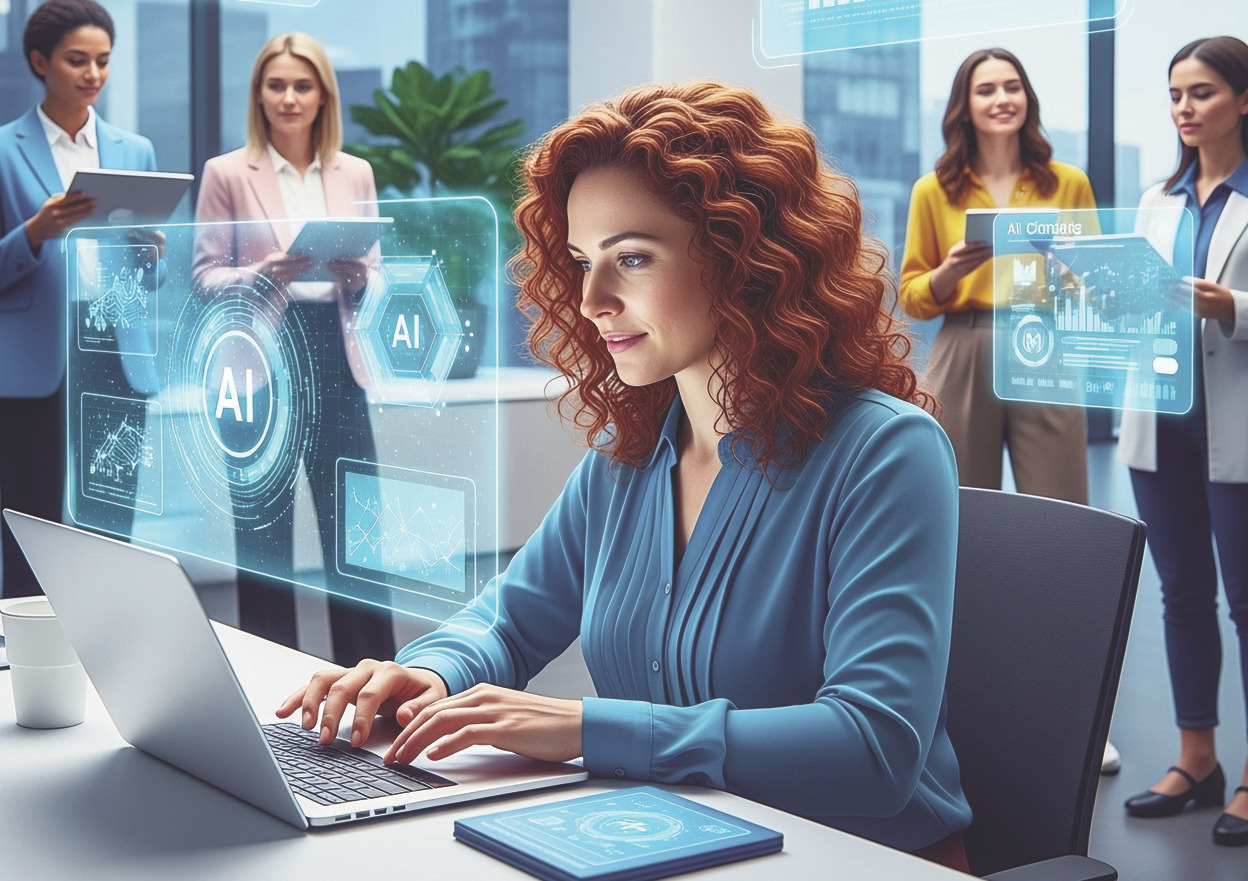
ChatGPT is the easiest example because it is widely recognized and flexible. A spa director might use it to turn a month of guest comments into five coaching themes, create three versions of a staff memo, outline a manager training session or pressure-test a seasonal promotion. But ChatGPT is only one tool in a much larger market that also includes several universal AI tools and industry platforms such as Agilysys, LOULOU AI and Meevo.
That variety is good news for spa leaders. They do not need to choose one tool or master every category of AI to begin seeing value. Universal platforms can help with writing, planning, analysis, brainstorming and summarizing, while hospitality-oriented systems increasingly use AI to improve guest communication, personalization, booking, reputation management and operational efficiency. The spa, salon, medspa and wellness sectors also benefit from purpose-built platforms that apply AI to the specific rhythms of appointment-based service, guest engagement, retail strategy, business intelligence and daily workflows.
AI Questions for Spa Leaders
- Where are we losing time to repetitive work?
- Where are guests waiting too long for answers?
- Where do managers need better data?
- Where could staff communication be clearer?
- Where can automation create more space for care?
The best use of AI is not outsourcing leadership. It is increasing leadership capacity. A well-prompted AI tool can organize information faster than a manager can start from a blank page. It can help an owner compare scenarios before making a pricing decision. It can help a spa director prepare for a difficult conversation with more clarity and empathy. It can help a marketing team personalize outreach without sounding generic. It can help HR teams build more consistent onboarding and training materials. Those are professional gains, but they still require professional judgment.
That distinction matters in spa more than almost anywhere. Guests do not return because a spreadsheet was optimized. They return because they felt welcomed, remembered, cared for and restored. A therapist’s intuition, a front-desk associate’s warmth, a manager’s wisdom and a company’s culture cannot be automated into existence. AI can support those values by removing friction around the work, as leaders see patterns earlier, communicate more clearly and make better use of scarce time.
The leaders who benefit most will not be the ones who ask AI to “run the business.” They will be the ones who ask better questions: Where are guests experiencing friction? Which tasks drain our team’s energy? Which reports do we avoid because they take too long? Where could we be more consistent? What would help our managers coach with confidence?
In 2023, asking AI to write a marketing email felt like a glimpse of the future. In 2026, that same exercise feels like training wheels. Expectations have changed because the tools have changed and because leaders have changed. AI is no longer impressive simply because it produces words. It becomes valuable when it improves decisions, protects culture, supports people and creates more room for the human touch.
Human Touch Guardrails
- Never let AI make final decisions about people without human review.
- Do not paste sensitive guest, health, employee or payment data into tools that are not approved for that use.
- Review all guest-facing AI content for accuracy, warmth and brand voice.
- Use AI to support culture—not flatten it.

NEWS AND DATA CITATIONS
- Gallup’s 2026 workplace AI research reported half of employed U.S. adults use AI at least a few times a year, 13 percent use it daily and 28 percent use it a few times a week or more; it also found 65 percent of employees in AI-adopting organizations say AI has improved productivity and efficiency. https://www.gallup.com/workplace/404225/rising-adoption-spurs-workforce-changes.aspx
- SHRM’s 2026 AI-in-HR research reported improved efficiency, work quality and creativity, while also emphasizing workforce evolution, reskilling and a role shift rather than broad job displacement. https://www.shrm.org/
- Hospitality Net’s recent issue includes a story that shows similar movement from experimentation to implementation within the hospitality realm. https://www.hospitalitynet.org/
- BCG described AI-first hotels as leaner to operate and richer in customer and employee experience. https://www.bcg.com/publications/2026/ai-first-hotels-leaner-faster-smarter
(Images: large product/LED facial mask; holographic AI workspace; smiling spa professional; other small thumbnails and archival covers omitted where file paths were not available.)