New ISPA Playbook Reveals How Spas Can Shape the Guest Experience Before Treatment Begins
SPA LEADERS HAVE LONG FOCUSED on treatment quality to drive satisfaction, but new research from the ISPA Research Foundation suggests the guest experience begins much earlier.
ISPA's new Science-based Playbook for Creating Spa Visit Anticipation, created with Science Says Research, explores how booking, waiting and arrival shape guest perceptions before treatment begins. Built on 33 peer-reviewed scientific studies and featuring 31 actionable recommendations, the 56-page report gives spa leaders practical ways to build excitement, reduce friction and improve operational outcomes.
The result is a practical, research-backed guide to an area of the spa experience that has historically received less attention: what guests think, feel and do before they ever enter the treatment room.
Why pre-visit experience matters
Many operators focus their guest satisfaction efforts on the service itself. That makes sense, but it is only part of the picture. According to the playbook, guest perceptions are shaped across a series of earlier touchpoints, beginning with the moment a treatment is booked and continuing through confirmation messages, reminders, wait time and arrival.
A booking flow can either create ease or friction. A reminder can either feel transactional or build excitement. A waiting area can either heighten impatience or make the upcoming experience feel more valuable. The playbook's central insight is that anticipation can be designed—and when it is designed well, it can influence satisfaction, loyalty, cancellations and rebooking behavior.
“The guest experience does not begin in the treatment room. It begins the moment the appointment is booked.”
Turn "see you soon" into a strategy.
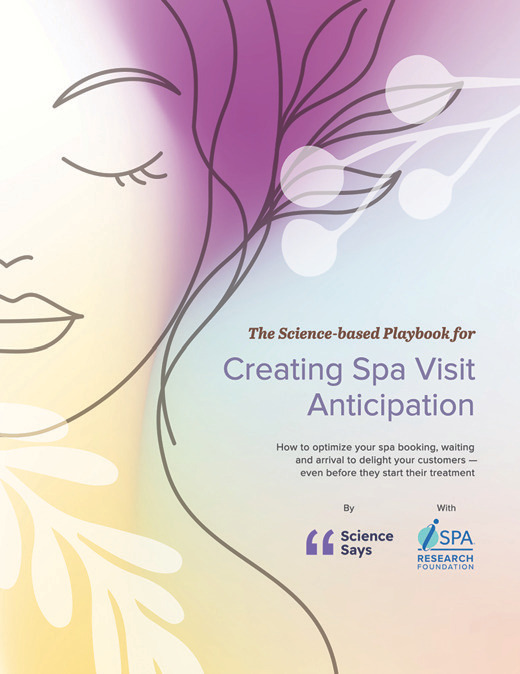
ISPA members can access the new Science-based Playbook for Creating Spa Visit Anticipation now in the Research Library at experienceispa.com. The report offers practical, science-backed ideas for shaping the guest experience from booking to arrival.
Key findings spa leaders can act on now
The report's findings are especially useful because they connect behavioral science to practical spa operations. Among the strongest data points:
- Customization can reduce cancellations by up to 46 percent. Small choices, such as scent or music, can increase guests' sense of ownership.
- Simplifying the booking journey can make booking feel up to 45.2 percent easier. Breaking choices into smaller steps can reduce friction and make the process feel more manageable.
- Membership language can increase satisfaction by up to 16.6 percent. When guests create an account or log in, reminding them that they are "members" can strengthen belonging and satisfaction.
- Pre-visit rituals can increase enjoyment by up to 41.4 percent. A simple guided breathing exercise or other small ritual shared before arrival can deepen engagement with the experience.
Quick wins for spa leaders
- Break booking into simple steps.
- Offer small personalization choices.
- Send anticipation-building reminders.
- Use relevant media in waiting areas.
- Create signature sensory cues on arrival.
- Instant refunds can increase likelihood to rebook by up to 12.2 percent. Even when a guest cancels, a fast, positive refund experience can preserve trust and future intent.
- Relevant media can reduce felt wait time by up to 27.5 percent. Spa-related content in waiting spaces can make time feel shorter and more purposeful.
- Signature scents can strengthen next-day memory by up to 63.6 percent. Ambient scent is not just atmospheric; it can help guests remember the experience more vividly.
- Warmer physical temperatures can increase perceived value by up to 43.9 percent. Environmental cues can influence how guests evaluate the worth of an experience.
From research to real-world operations
The playbook is organized around the actual guest journey, with chapters on booking, waiting and arrival. It also includes checklists, ready-to-use examples and exclusive researcher insights, making it less a research summary than an operational toolkit. Many recommendations involve practical levers—messaging, sequencing, sensory cues, booking design and staff awareness—that can be tested quickly without major capital investment.
For ISPA Research Foundation Chair Kelleye Martin, that practicality is the point. The playbook reflects a broader Foundation priority: helping spa leaders see research not as abstract data, but as a business asset they can use. By connecting peer-reviewed science to everyday spa operations, the Foundation is reinforcing the value of research as a tool for improving guest experience, operational performance and long-term strategy.
FOUNDATION FOCUS
A new layer of competitive advantage
For spa leaders, the larger opportunity is anticipation design: using behavioral science to shape how guests feel before they arrive, how they interpret the experience and how they remember it afterward. In a market where guests have more choices and higher expectations, competitive advantage may depend not only on what happens during treatment, but on how intentionally the full journey is designed.
Three pre-visit moments that matter
- Booking: Reduce friction and create early excitement.
- Waiting: Use confirmations and reminders to maintain anticipation.
- Arrival: Design sensory cues that create delight before treatment begins.
Also coming soon:
2026 ISPA U.S. SPA INDUSTRY STUDY
Here's how to put it to work
EACH YEAR, THE BIG FIVE STATISTICS unveiled at the ISPA Conference serve as a teaser for something much more substantial. While valuable, these statistics are a condensation of the 50-plus page ISPA U.S. Spa Industry Study report, created from research conducted by the ISPA Research Foundation in partnership with PricewaterhouseCoopers (PwC) and McIlhenny Consulting.
If spa is where wellness begins, then the ISPA U.S. Spa Industry Study is where the business of wellness turns into strategy. For spa directors, the Industry Study is a practical tool for making smarter decisions every day. It translates industry performance into clear benchmarks, helping you understand where you stand and where to go next. With total revenue reaching $23.5 billion, visits climbing to 191 million and revenue per visit continuing to rise, the message is clear: Growth is happening, and there is opportunity for those who know how to act on it.
The value of the Industry Study is not just in the data, but in how you use it. Consider it your guide to aligning operations with what is actually happening across the industry.
ISPA RESEARCH FOUNDATION BOARD OF DIRECTORS
CHAIR Kelleye Martin Trellis Spa, The Houstonian Hotel, Club & Spa
VICE CHAIR Ella Kent The Spa at Sea Island · Charlotte Prescott ISPA Vice Chair Tierra Santa Healing House at Faena Hotel · ISPA CHAIR Kenneth Ryan The Estate · ISPA PRESIDENT Lynne McNees
HONORARY FOUNDATION BOARD MEMBER Deborah Szekely Rancho La Puerta